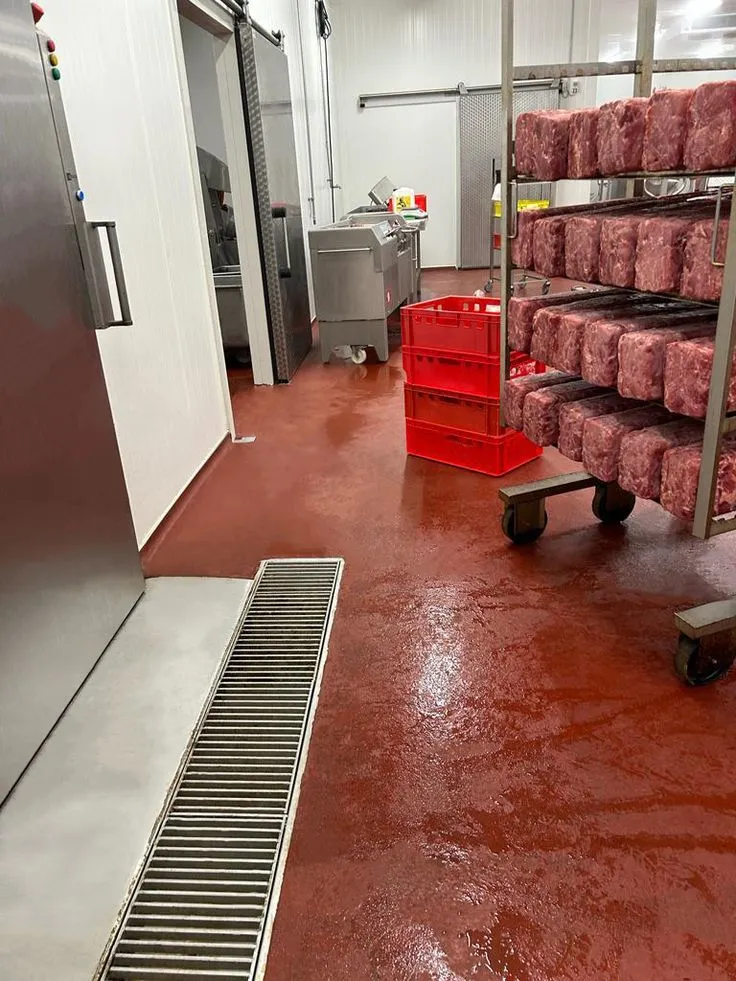
Seafood-processing environments place unusual demands on flooring because water is part of everyday operations. Melting ice, washdowns, saltwater residue, cleaning chemicals, carts, bins, and cold-storage traffic may all affect the same surface during a single shift. Areas can remain damp for long periods, while doorways between refrigerated and warmer spaces experience changing temperatures. A practical flooring plan should therefore consider drainage, traction, chemical exposure, temperature variation, and cleaning effort rather than treating the facility like an ordinary commercial kitchen.
Ice Creates Continuous Moisture
Ice is frequently used during receiving, handling, storage, and processing. As it melts, water spreads across work areas and may follow cart routes into surrounding sections.
Managers should observe where water collects and how quickly it reaches drains. Low spots can remain wet even when nearby sections dry efficiently.
Facilities researching Online Commercial Kitchen Epoxy Flooring Nj should therefore consider drainage and concrete slope before focusing only on the final coating. A resinous surface can improve continuity, but it cannot correct major substrate-level drainage problems by itself.
Salt and Brine Add Another Exposure
Seafood facilities may encounter saltwater, brine, product residue, and cleaning agents. These substances create different conditions from ordinary fresh-water exposure.
Facility teams should document the liquids and chemicals that regularly reach the floor, including sanitation products and their usual concentrations. This information helps guide resin-system and protective-finish selection.
The strongest specification is based on realistic repeated exposure rather than a generic claim that the floor is simply “chemical resistant.”
Cold Areas Create Transition Stress
Refrigerated rooms, chilled processing zones, and freezer entrances may sit next to warmer work areas. Carts and employees repeatedly cross these boundaries.
Thresholds can become high-stress locations because they combine temperature differences, condensation, wheeled traffic, and frequent cleaning. Cracked edges or old patches may deteriorate faster when narrow cart wheels pass over them throughout the day.
These transitions should be inspected carefully before resurfacing begins.
Texture Must Stay Cleanable
Wet seafood-processing floors need practical traction, but the roughest possible finish is not always the best choice.
Aggressive texture can trap scales, food residue, ice fragments, and cleaning products, increasing sanitation effort. A smoother floor may be easier to clean but unsuitable in consistently wet zones.
The surface profile should reflect employee footwear, drainage, cleaning tools, and spill frequency. Processing areas may need a different texture from packaging or comparatively dry storage spaces.
Drain Surrounds Need Detailed Attention
Drains often become some of the hardest-working parts of the floor. Water, residue, chemicals, and cleaning tools all concentrate around them.
Cracked concrete or failing repairs near drain edges should be addressed before new resin layers are installed. Poor transitions can make sanitation more difficult and may allow repeated moisture to reach damaged substrate.
A well-planned floor should connect cleanly with drainage infrastructure while allowing water to move away efficiently.
Mobile Bins Add Mechanical Wear
Seafood operations frequently use wheeled bins, racks, carts, and containers to move product between processing, chilling, packaging, and storage.
Loaded wheels can create concentrated stress at joints, doorways, and turning points. Small floor defects may become more noticeable under this repetitive traffic.
Managers should map these routes alongside wet zones so the flooring project addresses both moisture exposure and mechanical wear.
Contractor Experience Should Match the Environment
A seafood-processing facility needs more than a decorative coating. Managers comparing Hpsfloors with other flooring providers should evaluate experience with food-processing conditions such as washdowns, temperature changes, chemical cleaning, drainage, and heavy traffic.
Questions should cover mechanical substrate preparation, concrete repairs, texture selection, cove detailing, and return-to-service planning.
The proposed system should be explained in terms of the facility’s actual operating conditions.
Sanitation Cycles Reveal Weak Areas
Thorough cleaning often exposes problems that are less obvious during production. Water may remain around equipment, residue can collect in rough texture, and damaged edges may become visible once debris is removed.
Managers can use sanitation cycles as routine inspection opportunities. Locations that repeatedly take longer to clean or dry may deserve closer review.
Recording these patterns can help determine whether future repairs should remain localized or become part of a broader resurfacing project.
Conclusion
Seafood-processing floors must perform under continuous moisture, melting ice, brine, cleaning chemicals, refrigeration, and heavy cart movement. These overlapping conditions make the environment more demanding than a typical dry commercial space.
A stronger flooring strategy begins with drainage, substrate condition, chemical exposure, temperature transitions, and practical texture. Proper preparation, clean drain detailing, suitable resin chemistry, and focused inspections can then support a floor that is easier to maintain and better matched to the realities of seafood handling and sanitation.